
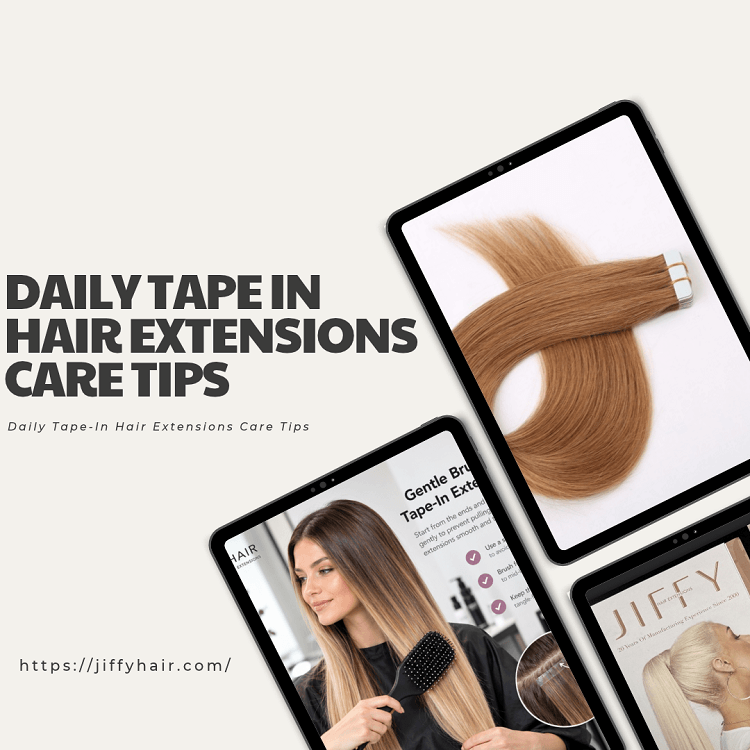
The best Tape-In Hair Extensions Care Tips are simple: brush gently, keep the adhesive areas dry and clean, avoid heavy products near the tape, protect the hair while sleeping, and follow a consistent washing and styling routine. With proper care, quality Tape-In Hair Extensions made from human Remy hair can maintain a natural appearance, smooth texture, and secure attachment for much longer.
For salon owners, hair brands, and professional stylists, explaining daily care is just as important as choosing the right extension. Even premium Tape-In Hair Extensions can experience tangling, dryness, shedding, or premature tape failure if clients use the wrong products or handle the hair too aggressively.
That is why professional Hair Manufacturers and Wholesale Hair suppliers should not only provide quality products but also help salons understand how to care for them after installation.
What Are the Most Important Tape-In Hair Extensions Care Tips?
The most important rule is to treat extensions differently from your natural hair.
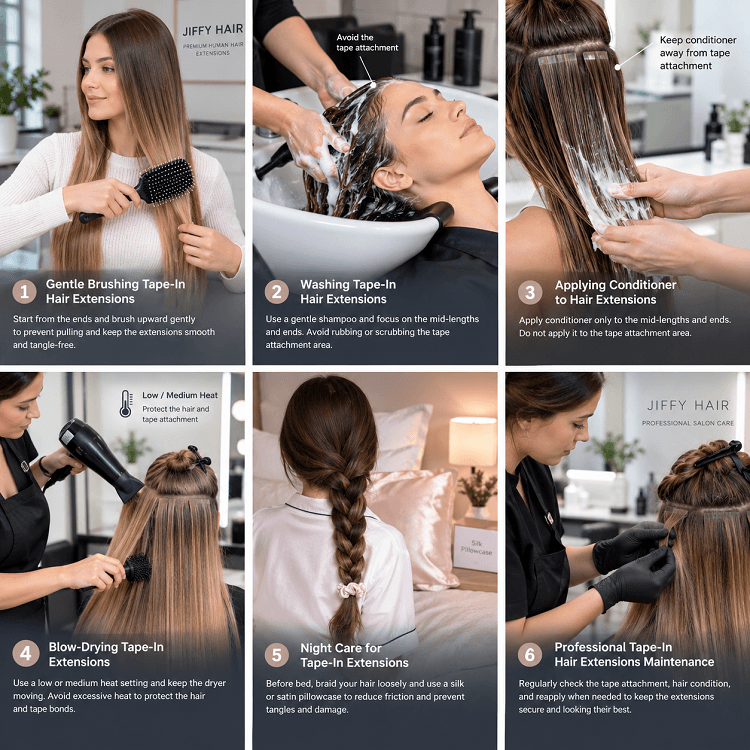
A simple daily routine should include:
- Brush gently from the ends upward.
- Keep the tape attachment area free from oils and heavy conditioners.
- Avoid aggressive pulling or brushing.
- Use suitable hair-care products.
- Dry the roots and tape area properly after washing.
- Protect the hair while sleeping.
- Reduce unnecessary heat exposure.
- Schedule professional maintenance when needed.
These basic habits can make a noticeable difference in the appearance and longevity of Tape-In Hair Extensions.
Why Does Daily Care Matter for Tape-In Hair Extensions?
Daily handling gradually affects both the hair and the attachment system.
Your natural hair receives oils from the scalp and continues to grow, while extension hair no longer receives natural nourishment from the scalp. As a result, the mid-lengths and ends can become dry if they are exposed to frequent washing, heat, friction, or chemical processing.
For human Remy hair, proper maintenance helps preserve:
- Softness
- Shine
- Manageability
- Natural movement
- Smooth ends
- Overall appearance
For salon professionals, this means good aftercare can help clients get better value from their investment.
How Should You Brush Tape-In Hair Extensions?
Brushing is one of the most important daily Tape-In Hair Extensions Care Tips.
Do not aggressively pull a brush from the roots to the ends. Instead, hold the hair above the tape area with one hand and gently work through the lower lengths with the other.
What Is the Best Brushing Method?
Try this simple routine:
- Separate the hair into manageable sections.
- Start at the ends.
- Remove tangles gradually.
- Move upward toward the mid-lengths.
- Finish by gently brushing the longer section.
- Avoid repeatedly brushing directly over the tape bonds.
A loop brush or extension-friendly brush can be useful because it is designed to work through extension hair with less pulling.
Should You Brush Tape-In Extensions Before Bed?
Yes. Brushing before sleeping can help prevent small tangles from becoming larger knots overnight.
Before going to bed:
- Gently detangle the hair.
- Make sure it is completely dry.
- Create a loose braid or low ponytail if appropriate.
- Avoid tight hairstyles that pull on the tape.
This small routine can reduce friction while the client moves during sleep.
How Often Should Tape-In Hair Extensions Be Washed?
There is no universal washing schedule because clients have different scalp types, lifestyles, and styling routines.
However, washing Tape-In Hair Extensions too frequently can expose the hair and adhesive area to unnecessary stress.
A practical approach is to wash when the hair and scalp actually need cleaning rather than automatically washing every day.
Clients who exercise frequently or have an oily scalp may need more frequent washing, while others may comfortably go longer between washes.
What Shampoo Should You Use on Tape-In Hair Extensions?
Choose a shampoo that is compatible with the extension system and avoid applying harsh or overly oily products directly to the tape area.
The goal is to clean the scalp and hair without unnecessarily compromising the adhesive.
When recommending products, salon professionals should consider:
- Gentle cleansing
- Compatibility with tape adhesive
- Moisture balance
- Extension-safe formulation
- Avoiding excessive oils around the attachment points
A professional Hair Manufacturer can also provide product-care recommendations for its specific tape system.
Where Should Conditioner Be Applied?
Conditioner is useful for keeping human Remy hair manageable, but placement matters.
Apply conditioner mainly to the mid-lengths and ends. Avoid coating the tape attachment area with rich conditioner or oil-based products.
Why?
Heavy conditioning products can make the attachment area slippery or interfere with the adhesive system.
A useful salon rule is:
Condition the lengths and ends, not the tape.
How Should You Wash Tape-In Hair Extensions?
Washing technique matters almost as much as product selection.
Instead of piling all the hair on top of the head and aggressively scrubbing, allow the hair to fall naturally downward.
A Simple Washing Routine
Step 1: Detangle first
Gently remove obvious knots before entering the shower.
Step 2: Wet the hair gradually
Allow water to flow downward through the hair.
Step 3: Clean the scalp
Massage the scalp gently rather than aggressively rubbing the extension attachments.
Step 4: Rinse thoroughly
Make sure shampoo is completely removed.
Step 5: Condition the lengths
Apply conditioner from the mid-lengths toward the ends.
Step 6: Rinse carefully
Avoid excessive manipulation while the hair is wet.
Wet extension hair can be more vulnerable to stretching and tangling, so gentle handling is important.
Why Should You Avoid Rubbing Wet Extensions?
Wet hair is generally more vulnerable to mechanical stress.
Aggressive rubbing with a towel can create friction, encourage tangling, and put unnecessary pressure on the attachment points.
Instead, gently squeeze out excess water and use a soft towel to blot the hair.
This is one of the easiest Tape-In Hair Extensions Care Tips for clients to follow.
How Should You Dry Tape-In Hair Extensions?
Do not leave the tape area wet for long periods.
After washing, gently remove excess moisture and dry the hair carefully.
What About Blow-Drying?
A blow dryer can be used, but excessive heat should be avoided.
A sensible routine is:
- Begin with moderate airflow.
- Keep the dryer moving.
- Avoid concentrating high heat on one area.
- Dry the roots and tape area carefully.
- Finish the lengths according to the desired style.
The goal is controlled drying rather than maximum heat.
Can You Use Heat Styling Tools on Tape-In Hair Extensions?
Yes, Tape-In Hair Extensions made from quality human hair can generally be styled with appropriate heat tools, but heat should always be controlled.
Excessive heat can gradually affect the condition of extension hair, particularly the ends.
For better results:
- Use heat protection.
- Choose an appropriate temperature.
- Avoid repeatedly passing the tool over the same section.
- Keep excessive heat away from the adhesive area.
- Do not use hot tools on soaking-wet hair.
For premium human Remy hair, responsible heat styling helps maintain its appearance over time.
Why Is Heat Protection Important?
Heat protectant creates an additional layer of protection between the hair fiber and styling heat.
For customers who regularly use straighteners, curling irons, or blow dryers, heat protection should become part of their normal extension-care routine.
However, the product should still be applied carefully. Excessive oils or heavy formulations around the tape attachment should be avoided.
Can You Sleep With Wet Tape-In Hair Extensions?
It is better to avoid sleeping with wet extensions.
Wet hair is more prone to tangling, while sleeping creates continuous friction between the hair and pillow.
Before bed, make sure the hair is:
- Fully or substantially dry
- Gently brushed
- Free from major tangles
- Loosely secured if necessary
A silk or satin pillowcase can also help reduce friction during sleep.
How Can Clients Prevent Tangling Overnight?
A simple nighttime routine can make a significant difference.
Try:
Brush → Dry → Loosely braid → Sleep
The hairstyle should never be so tight that it pulls on the tape attachments.
For long Tape-In Hair Extensions, a loose braid can also keep the lengths organized and reduce movement during sleep.
What Hairstyles Should You Avoid?
Tape-ins are versatile, but constantly wearing extremely tight hairstyles can put additional tension on the attachment points.
Avoid repeatedly using:
- Very tight ponytails
- Tight high buns
- Strongly pulled-back hairstyles
- Hairstyles that place constant tension on one section
Occasional styling is different from repeatedly applying tension every day.
Professional stylists can help clients choose hairstyles that provide variety without unnecessarily stressing the extension attachments.
Can You Swim With Tape-In Hair Extensions?
Clients can usually maintain an active lifestyle with extensions, but swimming requires extra care.
Chlorinated or salt water can affect hair condition, while prolonged moisture and friction can create additional challenges.
Before swimming:
- Tie the hair loosely.
- Minimize unnecessary exposure.
- Consider using a protective leave-in product suitable for extensions.
- Rinse the hair afterward.
- Detangle gently.
- Dry thoroughly.
If swimming is frequent, professional aftercare advice becomes even more important.
How Should You Protect Tape-In Extensions During Exercise?
Sweat, friction, and repeated movement can affect both the hair and attachment area.
Clients who exercise frequently should:
- Keep the hair organized.
- Avoid extremely tight hairstyles.
- Allow the hair to dry properly after workouts.
- Clean the scalp according to their individual needs.
- Brush gently after exercise.
A simple routine is usually better than trying to compensate with excessive washing or aggressive brushing.
Why Should You Avoid Oil Near the Tape?
Oil-based products can be particularly problematic around adhesive attachment points.
While oils can make extension lengths feel softer, applying them directly to the tape may interfere with adhesion.
If a client wants additional moisture, concentrate the product on the lower lengths and ends.
This distinction is particularly important for professional salons selling Tape-In Hair Extensions because customers may assume that every hair-care product is safe to apply everywhere.
How Can You Keep Tape-In Extensions Looking Smooth?
Smooth-looking extensions usually come from consistent small habits rather than one special product.
A good maintenance routine includes:
- Gentle brushing
- Regular washing
- Appropriate conditioning
- Controlled heat styling
- Nighttime protection
- Regular professional maintenance
High-quality human Remy hair can provide an excellent foundation, but daily care still determines how the finished style looks after weeks of use.
When Should Tape-In Hair Extensions Be Professionally Maintained?
Tape-in systems require professional attention as natural hair grows.
The exact maintenance schedule depends on the product, installation method, growth rate, and stylist’s recommendations.
During a maintenance appointment, a stylist can assess:
- Tape adhesion
- Hair growth
- Tangling
- Shedding
- Extension condition
- Scalp comfort
- Whether reinstallation or replacement is appropriate
Clients should follow the maintenance schedule recommended by their professional stylist and the specific extension manufacturer.
What Should Wholesale Hair Buyers Tell Their Customers?
For salons and brands purchasing Wholesale Hair, aftercare education can become part of the product experience.
Consider providing customers with a simple care guide covering:
Daily Care
Brush gently and protect the hair at night.
Washing
Use suitable products and avoid excessive manipulation.
Styling
Use heat protection and moderate temperatures.
Attachment Care
Keep oils and heavy conditioners away from the tape.
Maintenance
Return to a professional stylist for regular inspection and maintenance.
This can reduce avoidable complaints and help customers get better performance from their extensions.
How Does Hair Quality Affect Daily Care?
Not every extension behaves the same way.
The quality and processing history of the hair can influence its texture, manageability, and response to washing and styling.
For example, premium human Remy hair with carefully controlled processing can provide a strong starting point for a high-quality tape-in product.
However, even premium hair needs proper care.
That is why a reputable Hair Manufacturer should communicate both product specifications and recommended care practices.
What Should Salons Look for in a Tape-In Hair Manufacturer?
When sourcing Wholesale Hair, salons and brands should evaluate more than the product catalog.
Consider asking the manufacturer about:
- Hair source
- Remy or virgin hair specifications
- Tape quality
- Hair processing
- Available lengths and colors
- Color matching
- MOQ
- Sample availability
- Quality-control procedures
- Custom packaging
- Private-label options
- Production capacity
A reliable Hair Manufacturer should be able to explain its product specifications clearly and support professional buyers with samples and technical information.
How Can Jiffy Hair Factory Support Tape-In Hair Buyers?
For salons, distributors, and hair brands sourcing Wholesale Hair, Jiffy Hair Factory provides a B2B manufacturing option for human hair extension products.
Jiffy Hair can work with professional buyers on product specifications such as hair quality, length, color, packaging, and other project requirements.
For brands developing a Tape-In product line, discussing the following before production can help establish clearer expectations:
- Hair type
- Tape specifications
- Weight
- Length
- Color range
- Packaging
- Branding
- Sample approval
- Production requirements
A clear specification sheet helps both the buyer and Hair Manufacturer work toward consistent results.
Conclusion: Good Tape-In Care Starts With Good Daily Habits
The most effective Tape-In Hair Extensions Care Tips are not complicated. Brush gently, wash carefully, condition the lengths rather than the tape, minimize unnecessary heat, avoid heavy oils around the attachment points, protect the hair while sleeping, and maintain the extensions professionally.
For salons and brands, these recommendations are also part of delivering a better customer experience.
High-quality Tape-In Hair Extensions, especially those made with carefully selected human Remy hair, provide the foundation. Consistent aftercare helps clients maintain that quality.
For businesses sourcing Wholesale Hair, choosing an experienced Hair Manufacturer is equally important. A dependable supplier should provide clear specifications, consistent manufacturing, quality control, and professional support.
Jiffy Hair Factory works with salons, wholesalers, distributors, and hair brands looking for reliable human hair extension products and customized B2B solutions.
Frequently Asked Questions
1. How often should Tape-In Hair Extensions be brushed?
They should generally be brushed gently whenever needed, especially in the morning, before bed, and before washing. Start from the ends and work upward to minimize pulling.
2. Can I use conditioner on Tape-In Hair Extensions?
Yes. Conditioner can help maintain softness and manageability, but it should mainly be applied to the mid-lengths and ends rather than directly onto the tape attachments.
3. Can I use heat tools on Tape-In Hair Extensions?
Yes, quality human hair can generally be heat styled. Always use heat protection and avoid excessive temperatures, repeated passes, and direct heat on the tape area.
4. Why are my Tape-In Hair Extensions tangling?
Common causes include insufficient brushing, friction while sleeping, dry ends, improper washing, excessive product buildup, or rough handling when the hair is wet.
5. What should salons consider when buying Wholesale Hair?
Salons should evaluate hair quality, sourcing, Remy specifications, tape construction, color consistency, available lengths, samples, MOQ, quality control, customization, and the manufacturer’s production capability before placing a large order.

About Jiffy Hair – Trusted Wholesale Hair Extensions Supplier
Jiffy Hair Factory is a professional human hair extensions manufacturer and wholesale supplier established in 2001.
With over 20 years of experience in the hair industry, we specialize in producing salon-quality human hair extensions for salons, distributors, and hair brands across the United States and Europe.
Our factory follows strict quality control standards, including raw hair selection, professional processing, and multiple inspection stages to ensure consistent quality for professional markets.
We provide reliable bulk hair extension supply, private label services, and custom packaging solutions to support growing hair businesses worldwide.
If you are looking for a reliable hair extension factory or wholesale supplier, Jiffy Hair is ready to support your brand.
Contact Jiffy Hair Factory to learn more about our wholesale hair extensions and partnership opportunities.


 English
 Español