
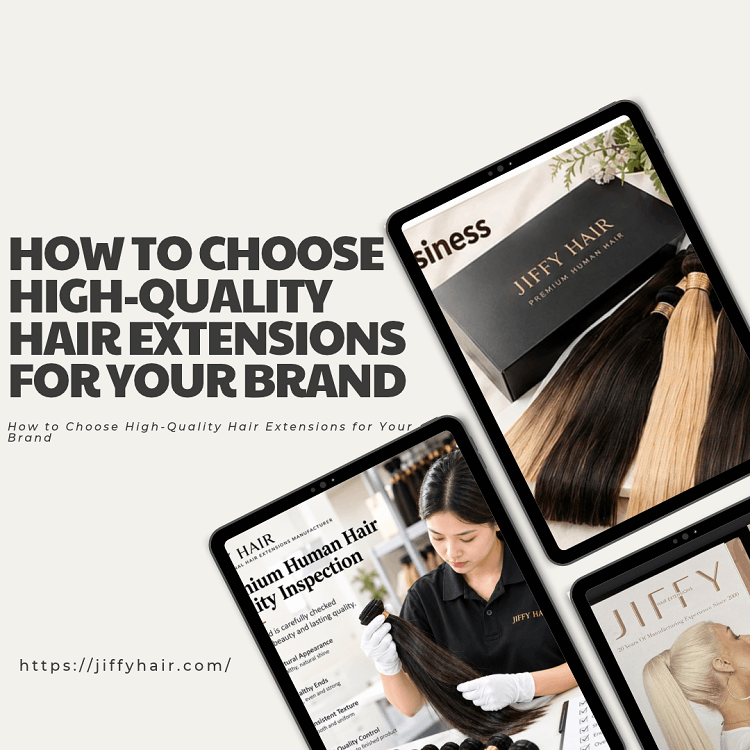
Choosing High Quality Hair Extensions for your brand starts with looking beyond appearance. The best hair should offer consistent quality, natural texture, reliable durability, good processing performance, and stable supply from experienced Hair Extensions Manufacturers. For a growing hair brand, the right supplier is not simply the company offering the lowest price—it is the manufacturing partner that can consistently deliver the product your customers expect.
The hair extension market has become increasingly competitive. Customers can compare textures, colors, application methods, and prices within minutes. That means your brand needs more than attractive packaging. You need hair that looks natural, performs well in professional applications, and maintains consistent quality from one order to the next.
If you are sourcing Wholesale Hair Extensions for a salon, online store, distributor, or private-label brand, this guide will help you evaluate hair quality and choose a manufacturing partner with greater confidence.
What Makes High Quality Hair Extensions?
The first thing to understand is that hair quality involves several factors rather than one single feature.
High Quality Hair Extensions typically combine:
Natural-looking appearance
Soft and manageable texture
Good hair alignment
Consistent thickness
Strong and secure construction
Minimal unnecessary shedding
Good styling performance
Consistent color and texture
Appropriate processing
Reliable quality control
A product may look impressive in a photograph but perform differently after washing, coloring, brushing, or repeated styling. For that reason, professional buyers should evaluate hair beyond its initial appearance.
Why Does Hair Quality Matter So Much for Your Brand?
High-quality hair directly affects your brand reputation. When customers receive extensions that feel natural, blend well, and remain manageable after repeated use, they are more likely to reorder.
On the other hand, inconsistent hair can create problems such as:
Excessive tangling
Unusual shedding
Dry or brittle ends
Inconsistent color
Uneven density
Poor blending
Customer complaints and returns
For a growing hair business, these problems can cost much more than the original price difference between a low-cost product and a better-quality product.
Key takeaway: Hair quality is part of your brand identity, not just a product specification.
How Can You Check the Source of the Hair?
The origin and sourcing method deserve careful attention when comparing Hair Extensions Manufacturers.
Ask your supplier where the hair comes from, how it is collected, and how it is sorted before production. Different sourcing and processing methods can create significantly different results.
For premium product lines, buyers may look for terms such as:
Remy human hair
Cuticle-aligned hair
Single-donor hair
Raw human hair
Carefully sorted human hair
However, terminology alone does not guarantee quality. A professional buyer should ask for samples and evaluate the actual product.
What Is Cuticle Alignment and Why Does It Matter?
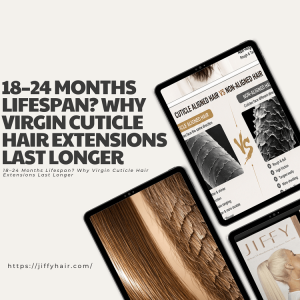
Cuticle alignment refers to keeping the natural outer layer of individual hair strands running in the same direction.
When hair is properly aligned, it can help improve the way the extensions move, feel, and respond to washing and styling.
For example, cuticle-aligned hair can provide:
More natural movement
Better strand organization
Reduced friction between individual hairs
A smoother overall feel
Better performance during repeated use
This is particularly important for brands positioning their products as premium High Quality Hair Extensions.
Should You Choose Remy or Virgin Hair?
Both Remy and virgin hair can be valuable product categories, but they should not be treated as interchangeable terms.
Remy hair generally refers to hair collected and processed with attention to keeping the cuticles aligned. Virgin hair generally refers to hair that has not undergone chemical processing before collection or use, although definitions and supplier practices can vary.
If your brand focuses on premium products, ask your Hair Extensions Manufacturers to clearly explain:
Whether the hair has been chemically processed
Whether the cuticles are aligned
Whether the hair is single-donor or mixed-donor
What treatments have been applied
How the hair performs after washing
The actual sample remains more important than a label on a product sheet.
How Important Is Hair Texture?
Texture is one of the easiest quality characteristics for customers to notice.
Whether you are selling straight, body wave, deep wave, curly, or textured extensions, the pattern should look intentional and reasonably consistent throughout the product.
When evaluating a sample, check:
Is the texture consistent from top to bottom?
Look at the entire bundle rather than only the first few centimeters. The hair should maintain a reasonably consistent texture throughout its length.
Does the hair recover after washing?
A quality sample should be evaluated after washing and drying. Some products look excellent when coated or freshly processed but change noticeably after washing.
Does it retain natural movement?
Premium hair should generally maintain a natural drape and movement appropriate to its texture.
Why Should You Always Test Hair After Washing?
A washing test is one of the most useful ways to evaluate Wholesale Hair Extensions.
Hair can feel extremely smooth when it is newly processed, conditioned, or coated. Washing removes some of those temporary effects and gives you a better idea of how the underlying hair performs.
For a practical supplier evaluation, test:
Initial texture
Wet-hair feel
Dry-hair feel
Tangling
Shedding
Brushing performance
Texture retention
End condition
A supplier that is confident in its product should be comfortable discussing testing procedures and providing samples.
What Should You Look for in the Hair Ends?
The ends are an important quality indicator, particularly for long hair extensions.
Look for ends that appear reasonably full and natural rather than extremely thin, brittle, or excessively dry.
For premium High Quality Hair Extensions, buyers should pay attention to:
Thickness through the length
End fullness
Split ends
Dryness
Uneven processing
Excessive short fibers
Soft, healthy-looking ends can make extensions blend more naturally with a customer’s own hair.
How Should You Evaluate Hair Thickness?
Thickness should not be judged only by the total weight of a bundle.
Two products may have the same gram weight but produce very different visual results because of differences in length, density, construction, or hair distribution.
For Wholesale Hair Extensions, ask your supplier about:
Weight per piece
Weight per pack
Length
Width
Density
Number of pieces
Available specifications
This is especially important when developing your own brand because customers need consistent products from one purchase to another.
Why Is Color Consistency Important for Hair Brands?
Color is another area where consistency matters.
If you sell #1B, #2, blonde, balayage, ombré, or custom colors, customers expect the same color specification to remain reasonably consistent between batches.
Professional Hair Extensions Manufacturers should have a defined color-matching and quality-control process.
For custom colors, ask for a physical color sample or approval sample before starting a larger production run.
This is particularly important for private-label brands because your customers associate the color result with your brand—not with the factory behind the product.
How Should You Evaluate Bleachability?
If your brand sells premium human hair, bleaching performance can become an important selling point.
However, bleaching should always be evaluated through controlled testing rather than assuming that every human hair product will respond in the same way.
Ask your manufacturer:
What level of bleaching is recommended?
Has the hair already been chemically processed?
What blonde shades can reasonably be achieved?
Does the hair maintain acceptable condition after processing?
Can the factory provide a bleaching sample?
For professional salons and colorists, predictable processing behavior can make a significant difference.
What Construction Details Should You Check?
Hair quality is only one part of the final product. The construction of the extension itself also matters.
Depending on the product, check:
Weft construction
Stitching
Tape quality
Keratin tip construction
Clip attachment
Ring or bead quality
Weft thickness
Cuttable design
Shedding resistance
For example, a premium weft should be constructed according to its intended application and should maintain its integrity during professional handling.
Different products require different specifications, so always evaluate construction together with the intended installation method.
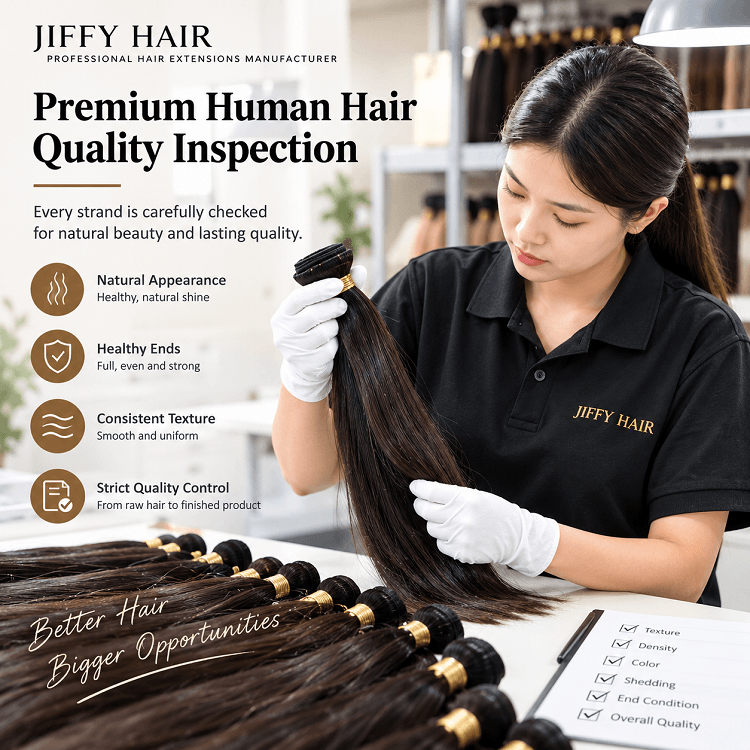
How Important Is Factory Quality Control?
A reliable factory should have a quality-control process rather than relying solely on final inspection.
A professional manufacturing workflow may include checks at different stages:
Raw material → Sorting → Processing → Production → Inspection → Packaging → Shipment
This approach helps identify quality issues earlier.
When comparing Hair Extensions Manufacturers, ask about their QC procedures instead of asking only for their product catalog.
Should You Choose a Factory or a Trading Company?
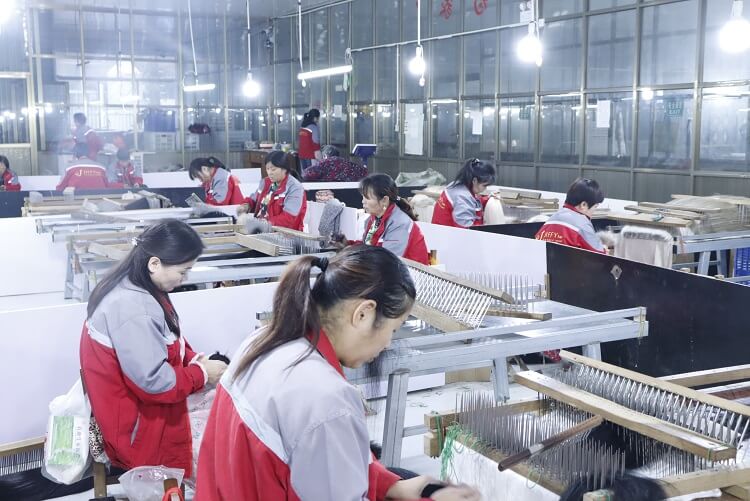
Both factories and trading companies can serve different business needs, but brands looking for long-term product development may benefit from working directly with an experienced Hair Extensions Factory.
A factory-direct relationship can potentially provide better communication around:
Product specifications
Customization
Packaging
Quality requirements
Sample development
Production schedules
Repeat orders
For businesses planning regular wholesale purchases, direct communication with the manufacturing team can also make technical discussions easier.
What Should You Ask a Hair Extensions Manufacturer Before Ordering?
Before placing a large order, create a supplier checklist.
Ask your potential Hair Extensions Manufacturers:
Product Questions
What type of human hair is used?
Is the hair Remy, virgin, raw, or processed?
Are the cuticles aligned?
Is the hair single-donor or mixed-donor?
What chemical processing has been applied?
Production Questions
What is the minimum order quantity?
Can you provide samples?
Can you customize colors and lengths?
Can you develop private-label packaging?
What are the production lead times?
Quality Questions
How is shedding tested?
How is color consistency controlled?
How are finished products inspected?
Can you provide close-up product videos?
How are repeat batches kept consistent?
A manufacturer that can answer these questions clearly is easier to evaluate than one that focuses only on price.
Why Are Samples Essential Before Buying Wholesale Hair Extensions?
Never rely exclusively on photos when purchasing Wholesale Hair Extensions.
A physical sample allows you to test what your customers will actually receive.
Ideally, evaluate the sample through several stages:
Touch → Comb → Wash → Dry → Style → Color if applicable → Recheck
Record your observations and compare samples from multiple suppliers.
This process takes more time, but it can prevent expensive mistakes when placing a larger wholesale order.
How Can Jiffy Hair Factory Support Your Brand?
For brands searching for an experienced Hair Extensions Manufacturer, Jiffy Hair Factory provides a B2B-oriented manufacturing option for businesses sourcing human hair extensions.
Jiffy Hair works with salons, wholesalers, distributors, and hair brands that need different extension formats and specifications.
Depending on your project, you can discuss products such as:
Tape-In Hair Extensions
Keratin Hair Extensions
Genius Weft
Hand-Tied Weft
Nano Ring Extensions
Feather Hair Extensions
Hair Toppers
Other human hair extension products
For private-label businesses, product customization and packaging can also be discussed according to the project’s requirements.

What Makes a Good Long-Term Hair Supplier?
The best supplier is not necessarily the cheapest supplier.
A strong long-term Hair Extensions Manufacturer should offer a combination of:
Consistent product quality
Clear communication
Stable manufacturing capability
Flexible product options
Reliable quality control
Sample support
Reasonable production lead times
Customization capability
Professional after-sales communication
Your supplier should be able to grow with your business.
As your sales increase, you may need more colors, new extension methods, custom packaging, or larger production capacity. A manufacturing partner who can adapt to those requirements becomes increasingly valuable.
How Can You Build a Stronger Hair Extension Brand?
Choosing High Quality Hair Extensions is only the first step.
A successful brand should also build a clear product strategy. Instead of launching dozens of products immediately, consider starting with several products that match your target customers.
For example:
Salon-focused brand: Tape-In, Weft, Keratin Extensions
Online hair brand: Clip-In, Tape-In, Hair Toppers
Professional extension distributor: Tape-In, Genius Weft, Hand-Tied Weft, Keratin Extensions
Once you understand which products perform best, you can expand your range based on customer demand.
Conclusion: Choose Quality Before Price
Choosing High Quality Hair Extensions requires more than comparing supplier prices. You need to evaluate the hair source, cuticle alignment, texture, thickness, ends, color consistency, construction, processing performance, and factory quality-control system.
For brands buying Wholesale Hair Extensions, the most important question is not simply, “How much does it cost?” A better question is, “Can this manufacturer consistently produce the quality my customers expect?”
By requesting samples, performing washing and styling tests, checking construction details, and communicating directly with experienced Hair Extensions Manufacturers, you can make a much more informed sourcing decision.
For businesses looking for a long-term manufacturing partner, Jiffy Hair Factory welcomes wholesale, salon, distributor, and private-label inquiries. The right manufacturing relationship can give your brand a stronger foundation—from the first sample to your next large production order.
Frequently Asked Questions
1. What are the most important signs of High Quality Hair Extensions?
Natural texture, consistent density, good-quality ends, appropriate hair alignment, stable color, minimal unnecessary shedding, and good performance after washing are important indicators of High Quality Hair Extensions.
2. Should I request samples before ordering Wholesale Hair Extensions?
Yes. A physical sample allows you to evaluate texture, shedding, tangling, construction, color, thickness, and performance before committing to a larger wholesale order.
3. What should I ask Hair Extensions Manufacturers about their hair?
Ask about hair source, processing, cuticle alignment, donor type, available textures and colors, quality-control procedures, customization, sample policies, MOQ, and production lead times.
4. Can Jiffy Hair Factory provide customized hair extensions?
Jiffy Hair Factory works with B2B customers and can discuss customized product specifications, colors, lengths, extension methods, packaging, and private-label requirements according to the project.
5. Is the cheapest hair extension supplier always the best choice?
Not necessarily. A lower purchase price can become expensive if inconsistent quality causes returns, complaints, poor reviews, or lost customers. For a growing brand, consistent quality and reliable manufacturing are often more valuable than the lowest initial price.

About Jiffy Hair – Trusted Wholesale Hair Extensions Supplier
Jiffy Hair Factory is a professional human hair extensions manufacturer and wholesale supplier established in 2001.
With over 20 years of experience in the hair industry, we specialize in producing salon-quality human hair extensions for salons, distributors, and hair brands across the United States and Europe.
Our factory follows strict quality control standards, including raw hair selection, professional processing, and multiple inspection stages to ensure consistent quality for professional markets.
We provide reliable bulk hair extension supply, private label services, and custom packaging solutions to support growing hair businesses worldwide.
If you are looking for a reliable hair extension factory or wholesale supplier, Jiffy Hair is ready to support your brand.
Contact Jiffy Hair Factory to learn more about our wholesale hair extensions and partnership opportunities.

 English
 Español