
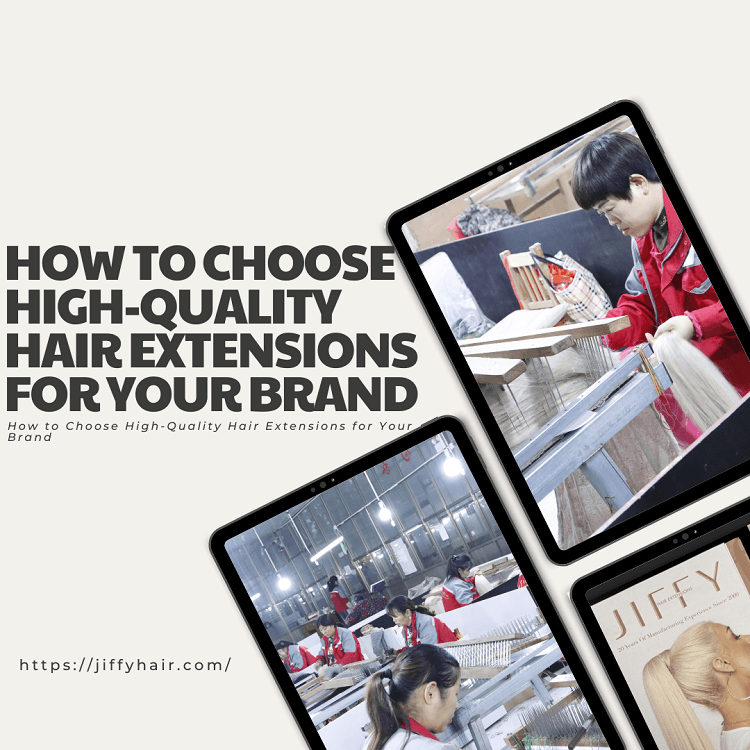
If you want to build a successful hair business, choosing High-Quality Hair Extensions should be your first priority—not simply finding the lowest price. The right hair supplier should offer consistent raw hair quality, reliable manufacturing, customization, stable supply, and clear quality control. Whether you are launching your first collection or looking for a new Hair Manufacturer, knowing How to Choose High-Quality Hair Extensions can help you avoid costly quality problems and build a brand customers trust.
For salon owners, wholesalers, and private-label hair brands, hair quality directly affects repeat purchases. A beautiful product may attract a first-time customer, but consistent performance is what brings that customer back.
So, what should you actually look for when comparing a hair factory, supplier, or manufacturer?
What Makes High-Quality Hair Extensions?
The first thing to understand is that “high quality” involves much more than appearance.
High-Quality Hair Extensions should provide a combination of:
- Healthy-looking human hair
- Consistent texture and density
- Good cuticle condition
- Minimal tangling and shedding
- Strong attachment or weft construction
- Reliable color consistency
- Good performance after washing
- Stable quality from batch to batch
For a growing hair business, consistency is particularly important. A supplier may send an excellent sample but deliver completely different quality in the next production batch. That’s why you should evaluate the manufacturer—not just the sample.
Why Does Hair Quality Matter for Your Brand?
Your customers don’t see your factory. They see your finished product.
If your High-Quality Hair Extensions remain soft, manageable, and attractive after repeated use, your brand gains credibility. If the hair tangles quickly or becomes excessively dry, customers will usually blame the brand rather than the factory.
Poor-quality hair can result in:
- Product returns
- Negative reviews
- Customer complaints
- Lost salon accounts
- Higher after-sales costs
- Damage to your brand reputation
For this reason, How to Choose High-Quality Hair Extensions is really a question about how to protect your long-term business.
How Can You Tell if Hair Extensions Are High Quality?
A visual inspection is useful, but it is not enough.
When evaluating High-Quality Hair Extensions, check the hair from several angles:
1. Look at the overall appearance
High-quality human hair should have a relatively natural appearance rather than an excessively coated or artificial shine.
Look for:
- Natural movement
- Even density
- Clean ends
- Consistent texture
- Healthy-looking strands
2. Feel the hair from root to tip
Run your fingers through the hair in both directions.
Natural cuticle-aligned hair can provide noticeable resistance when you move from the ends toward the root because the cuticles are oriented in the same direction.
This simple hand test can tell you more than a quick look at the hair.
3. Examine the ends
The ends are one of the easiest areas to inspect.
High-quality extensions should have reasonably full, consistent ends without excessive short fibers.
For premium products, ask the manufacturer about:
- End density
- Short hair percentage
- Hair sorting
- Return hair
- Processing history
What Is Cuticle-Aligned Hair?
Cuticle alignment is an important quality factor for many premium High-Quality Hair Extensions.
The cuticle is the outer protective layer of the hair shaft. In Cuticle Aligned Hair, the hair strands are arranged in the same general direction from root to tip.
This can help reduce friction between neighboring strands and support smoother performance.
For brands selling premium human hair extensions, asking about cuticle alignment is a smart starting point.
However, don’t rely on the phrase “cuticle aligned” alone. Ask your Hair Manufacturer how the hair is collected, sorted, processed, and tested.
Virgin Hair vs Processed Human Hair: What Is the Difference?
Not all human hair is the same.
Virgin hair generally refers to hair that has undergone little or no chemical processing before being manufactured into extensions. Depending on the supplier’s definition, specifications can vary, so buyers should always ask for clear documentation.
For a premium hair business, virgin hair may be suitable for customers looking for natural texture and higher customization potential.
Processed human hair, meanwhile, can still be commercially useful. It may be colored, treated, or otherwise processed to achieve specific textures and shades.
The key is transparency.
A reliable Hair Manufacturer should tell you what processing the hair has undergone instead of simply labeling every product “premium.”
How Important Is the Hair’s Source?
Source matters, but it should not be the only quality criterion.
When purchasing High-Quality Hair Extensions, ask your supplier:
- Where does the raw hair come from?
- Is the hair collected from individual donors or mixed sources?
- Is the hair cuticle aligned?
- Has the hair been chemically processed?
- How is the hair sorted?
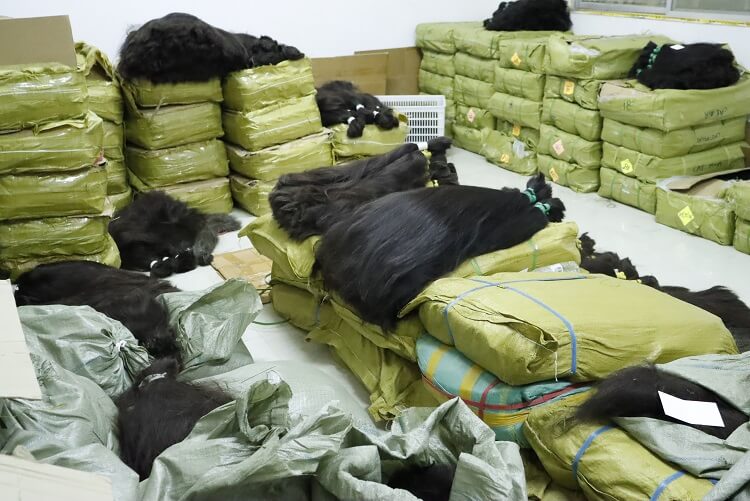
- How is the hair inspected before production?
For premium products, traceability and consistent sourcing can make a major difference.
If a hair factory cannot clearly explain its raw material process, consider that a warning sign.
Why Should You Test Hair After Washing?
A common mistake is judging extensions only when they are brand new.
Some hair products feel exceptionally smooth because of temporary surface treatments. After several washes, however, their actual condition may become much easier to evaluate.
That’s why washing tests are essential when learning How to Choose High-Quality Hair Extensions.
A Simple Washing Test
Ask your supplier for a sample and wash it according to normal salon procedures.
Then evaluate:
- Tangling
- Shedding
- Dryness
- Texture retention
- Elasticity
- Shine
- End condition
- Overall manageability
For a hair business, this test is particularly valuable because it gives you a better idea of how customers may experience the product after installation.
Is Silicone-Coated Hair Good or Bad?
Silicone itself isn’t automatically a sign of bad hair, but buyers should understand why it is being used.
Some hair may receive a surface coating that temporarily improves smoothness, shine, and manageability.
The problem occurs when buyers mistake temporary surface smoothness for intrinsic hair quality.
When comparing High-Quality Hair Extensions, ask:
Is the hair silicone-coated or surface-treated?
Then ask whether the manufacturer can provide an untreated sample for comparison.
A transparent Hair Manufacturer should be comfortable explaining its finishing process.
How Should You Test Shedding and Tangling?
There is no single test that determines every aspect of hair quality, but simple repeated handling can reveal important differences.
Take a sample and:
- Brush it gently.
- Run your fingers through the strands.
- Separate the hair into sections.
- Wash and dry it.
- Repeat the process several times.
- Inspect the ends after each test.
Watch for excessive shedding, matting, or increasing roughness.
For High-Quality Hair Extensions, performance should remain reasonably consistent rather than deteriorating dramatically after the first few washes.
What Should You Check on Weft Hair Extensions?
If you are purchasing weft products, don’t focus only on the hair itself.
The weft construction matters too.
Depending on your product category, inspect:
- Weft thickness
- Stitching density
- Edge strength
- Width
- Hair density
- Return hair
- Shedding
- Cutability
For example, buyers of Genius Weft, hand-tied weft, machine weft, or other specialized products should ask whether the weft can be cut to size without excessive unraveling.
A reliable Hair Manufacturer should be able to provide close-up production images or videos.
How Do You Evaluate Tape-In Hair Extensions?
Tape-in extensions require both hair quality and attachment quality.
For High-Quality Hair Extensions in tape-in formats, inspect:
- Hair density
- Tape edge
- Adhesive consistency
- Hair direction
- Hair shedding
- Thickness
- Reapplication performance
If you’re purchasing Wholesale Hair Extensions, ask whether replacement tape is available and whether the supplier can provide different tape specifications.
This becomes particularly important for salon-focused brands where clients expect consistent reapplication performance.
What Should You Know About Clip-In Extensions?
Clip-in extensions are often attractive to new hair brands because they are easy to package, display, and sell online.
However, quality isn’t determined by the clips alone.
Check:
- Clip strength
- Stitching
- Hair density
- Weft construction
- Hair direction
- Weight per set
- Length consistency
- End thickness
For your hair business, the product should feel balanced when worn. Excessively heavy pieces can affect comfort, while overly thin pieces may not provide the desired volume.
Why Is Supplier Consistency More Important Than a Cheap Price?
Price matters, but purchasing decisions based only on price can become expensive later.
Imagine finding a supplier that is 15% cheaper but has inconsistent quality. If customers return products or stop ordering, the apparent savings disappear quickly.
A professional Hair Manufacturer should help you maintain consistent specifications across production batches.
When comparing suppliers, consider:
| Factor | Why It Matters |
|---|---|
| Raw hair quality | Determines basic performance |
| Manufacturing process | Influences consistency |
| Quality control | Reduces defective products |
| Customization | Supports brand development |
| MOQ | Affects inventory investment |
| Lead time | Helps maintain stock |
| Packaging | Supports brand identity |
| Communication | Makes problem-solving easier |
The best supplier isn’t always the cheapest hair factory. It is usually the supplier that provides the best balance of quality, consistency, service, and cost.
How Can You Choose a Reliable Hair Manufacturer?
Before placing a large order, evaluate the manufacturer as carefully as you evaluate the product.
Ask these questions:
Does the factory have real manufacturing capabilities?
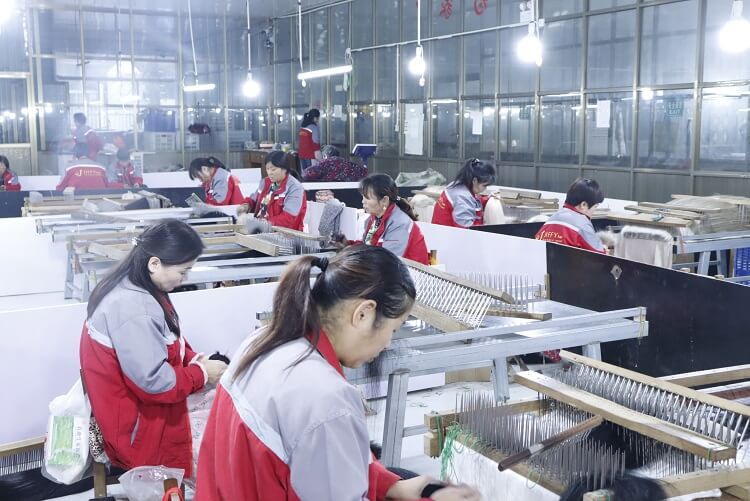
A genuine Hair Manufacturer should be able to explain its production process, equipment, workers, quality control, and capacity.
Can they provide samples?
Samples allow you to test the actual product before committing to a larger order.
Can they customize products?
If you are building a private-label brand, ask about:
- Custom colors
- Lengths
- Textures
- Weights
- Weft designs
- Tape specifications
- Packaging
- Logo printing
Can they maintain consistent quality?
This may be the most important question of all.
Your first order should not be your quality benchmark. Ask how the factory controls future batches.
What Quality-Control Process Should a Hair Factory Have?
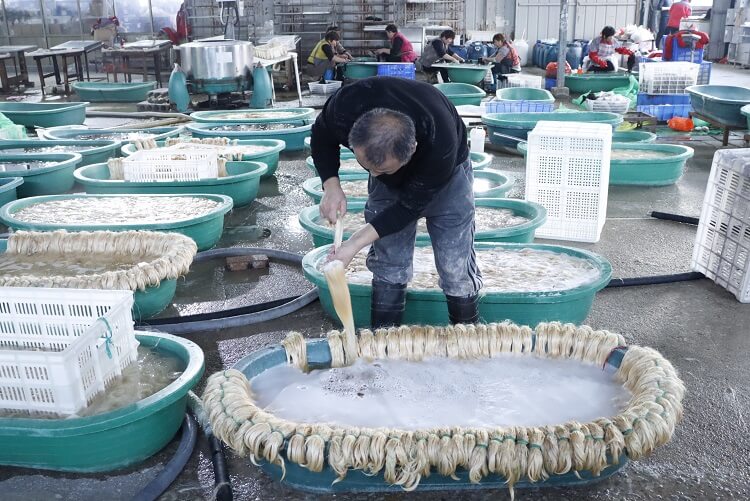
A professional hair factory should have quality control at multiple stages.
A practical production process can include:
Raw hair inspection → Sorting → Processing → Manufacturing → Finished-product inspection → Packaging → Final shipment
Each stage addresses different risks.
For example, raw hair inspection focuses on material quality, while finished-product inspection checks dimensions, attachment, density, color, and overall appearance.
For brands ordering High-Quality Hair Extensions at wholesale volume, multi-stage inspection can help reduce inconsistencies.
How Can You Build a Strong Private-Label Hair Business?
Once you have selected a reliable supplier, think beyond individual products.
Your hair business should have a consistent product strategy.
For example, you could build collections around:
- Tape-in extensions
- Clip-in extensions
- Genius Weft
- Hand-tied weft
- Keratin extensions
- I-Tip extensions
- U-Tip extensions
- Nano extensions
You can then create consistent color systems, packaging, branding, and product specifications.
A capable Hair Manufacturer can become more than a supplier. It can become part of your product-development process.
Why Should You Work Directly With a Hair Factory?
Buying directly from a hair factory can provide several advantages for B2B buyers.
These may include:
- More direct communication
- Greater customization flexibility
- Better control over specifications
- Factory-level pricing
- Production visibility
- More efficient sample development
For growing brands, direct cooperation with a Hair Manufacturer can also make it easier to develop exclusive products.
What Can Jiffy Hair Offer Your Brand?
For brands, salons, and wholesalers looking for High-Quality Hair Extensions, Jiffy Hair focuses on factory-direct manufacturing and B2B customization.
At Jiffy Hair, buyers can discuss product specifications based on their target market, product positioning, and brand requirements.
Depending on the product, customization can include:
- Hair texture
- Length
- Color
- Weight
- Extension method
- Packaging
- Branding
- Product specifications
The goal is not simply to sell another box of hair. It is to help B2B customers develop products that fit their own market.
How to Compare Two Hair Suppliers Before Ordering
If you are currently comparing multiple suppliers, create a simple scorecard.
Rate each supplier from 1–5 for:
Hair quality:
Does the hair perform well after washing?
Consistency:
Can the supplier maintain the same quality across batches?
Manufacturing:
Does the company demonstrate real production capability?
Customization:
Can the factory adapt products to your specifications?
Communication:
Does the sales team understand technical requirements?
Sampling:
Can you test samples before bulk production?
Price:
Is the price competitive for the quality offered?
This method makes it easier to compare a local reseller with a direct Hair Manufacturer or hair factory.
What Should You Ask Before Placing a Wholesale Order?
Before making your final decision, send your supplier a detailed specification sheet.
Include:
- Hair type
- Hair source requirements
- Cuticle alignment
- Color
- Length
- Weight
- Texture
- Attachment method
- Weft width
- Packaging
- Logo requirements
- MOQ
- Sample requirements
- Quality standards
The more specific your requirements are, the easier it becomes for your Hair Manufacturer to produce consistently.
Final Takeaway: Choose Quality Before Price
Choosing High-Quality Hair Extensions is ultimately about looking beyond the appearance of a sample. You need to evaluate the raw hair, cuticle condition, processing, construction, washing performance, quality control, customization capabilities, and long-term consistency.
For a growing hair business, the right Hair Manufacturer can have a direct impact on customer satisfaction and brand reputation.
Before placing a large wholesale order, always request samples, test the hair after washing, inspect the construction, clarify the specifications, and communicate your expectations clearly.
If you are searching for a reliable Hair Manufacturer or hair factory for your next collection, Jiffy Hair can work with you on wholesale products, custom specifications, and private-label development.
Your brand deserves more than hair that simply looks good on day one. Choose a manufacturing partner that can help you deliver quality consistently.
FAQs About High-Quality Hair Extensions
1. How do I know if hair extensions are high quality?
Check the hair’s appearance, texture, ends, shedding, tangling, construction, and performance after washing. A reliable supplier should also provide clear information about sourcing and processing.
2. What is the difference between virgin hair and processed human hair?
Virgin hair generally undergoes little or no chemical processing, while processed human hair may be colored, treated, or chemically altered. Always ask your supplier for its specific definition and processing details.
3. Should I request samples before ordering wholesale hair extensions?
Yes. Samples allow you to evaluate the actual hair quality, construction, color, density, washing performance, and overall suitability before making a larger investment.
4. Why should I buy directly from a hair factory?
A direct hair factory can offer more direct communication, customization options, production visibility, and factory-level wholesale pricing compared with some intermediaries.
5. Can Jiffy Hair customize hair extensions for brands?
Yes. Jiffy Hair works with B2B customers on product specifications such as colors, lengths, textures, weights, extension methods, packaging, and branding, depending on the product and order requirements.

About Jiffy Hair – Trusted Wholesale Hair Extensions Supplier
Jiffy Hair Factory is a professional human hair extensions manufacturer and wholesale supplier established in 2001.
With over 20 years of experience in the hair industry, we specialize in producing salon-quality human hair extensions for salons, distributors, and hair brands across the United States and Europe.
Our factory follows strict quality control standards, including raw hair selection, professional processing, and multiple inspection stages to ensure consistent quality for professional markets.
We provide reliable bulk hair extension supply, private label services, and custom packaging solutions to support growing hair businesses worldwide.
If you are looking for a reliable hair extension factory or wholesale supplier, Jiffy Hair is ready to support your brand.
Contact Jiffy Hair Factory to learn more about our wholesale hair extensions and partnership opportunities.

 English
  Español