
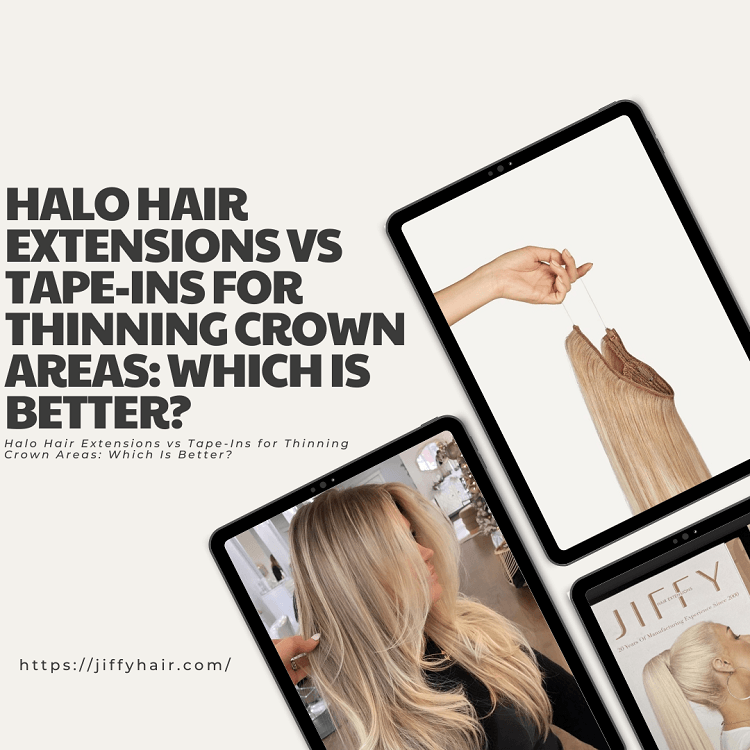
If you’re dealing with thinning at the crown, the short answer is this: Halo Hair Extensions are usually better for temporary volume with minimal tension, while Tape-Ins often provide more targeted coverage and longer-lasting results. The right choice depends on the severity of thinning, hair density, lifestyle, and whether the goal is everyday wear or occasional enhancement.
More women today are searching for solutions for thinning crown areas—not necessarily because of age, but due to stress, postpartum shedding, hormonal changes, heat styling, or naturally fine hair. At the same time, salon clients want discreet, comfortable solutions rather than obvious volume.
That’s why the debate around Halo Hair Extensions vs Tape-Ins has become increasingly relevant in salons across Europe and North America.
For salon owners, wholesalers, and hair brands, understanding which option performs better for crown thinning can help improve consultations, increase client retention, and create more specialized extension offerings.
Let’s break it down.
What Causes Thinning at the Crown Area?
Key Takeaway: Crown thinning has multiple causes and requires different extension strategies
The crown area is especially vulnerable because hair density naturally varies there.
Common causes include:
- Hormonal changes
- Aging
- Stress-related shedding
- Postpartum hair loss
- Excessive bleaching
- Tight hairstyles
- Genetics
Not all thinning requires medical treatment. Sometimes clients simply want fuller-looking hair.
That’s where Halo Hair Extensions and Tape-Ins enter the conversation.
What Are Halo Hair Extensions?
Key Takeaway: Halo Hair Extensions add volume without adhesive or attachment points
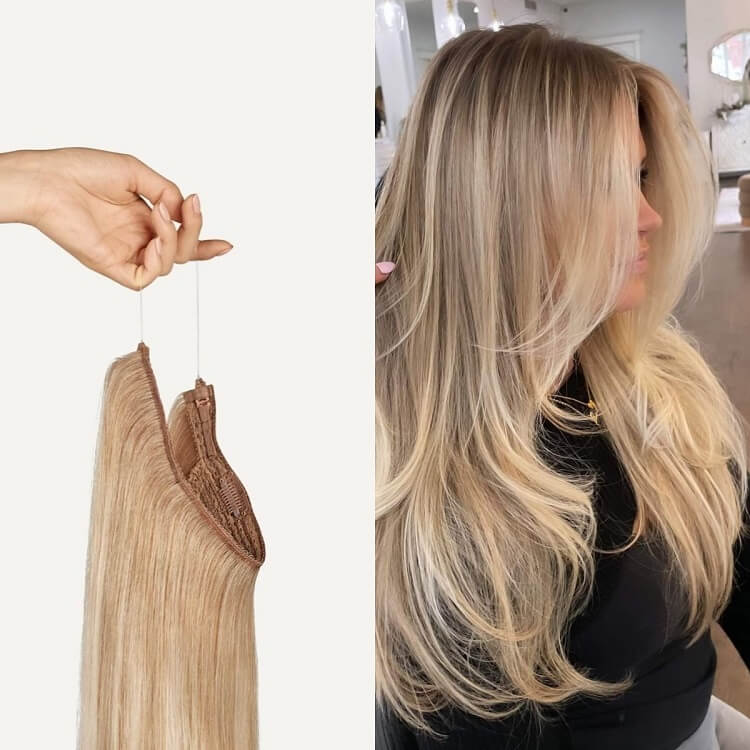
Halo Hair Extensions use an invisible wire system resting around the head.
They do not require:
- Glue
- Tape
- Heat
- Beads
Instead, they sit comfortably beneath the top layer of natural hair.
Main benefits of Halo Hair Extensions
✓ Quick installation
✓ Minimal tension
✓ Reusable
✓ Beginner-friendly
Because no bonding occurs, Halo Hair Extensions are often considered gentle on fragile hair.
What Are Tape-Ins?
Key Takeaway: Tape-Ins provide semi-permanent extension coverage
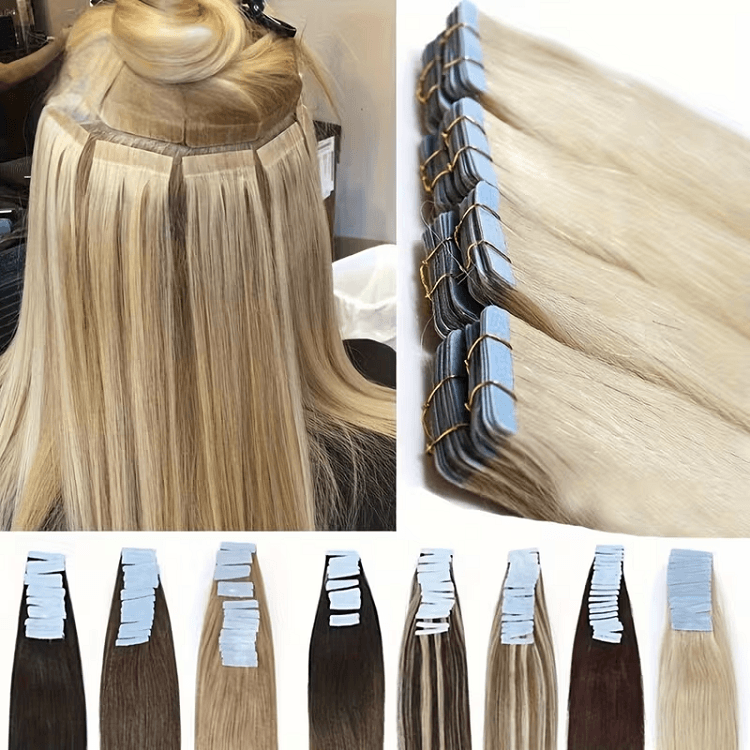
Tape-Ins use adhesive strips attached near natural hair roots.
They offer:
- Longer wear periods
- Better customization
- More integrated blending
- Professional installation
Typical wear:
6–10 weeks before repositioning.
Halo Hair Extensions vs Tape-Ins: The Quick Comparison
Key Takeaway: One prioritizes comfort, the other prioritizes permanence
| Feature | Halo Hair Extensions | Tape-Ins |
|---|---|---|
| Installation | DIY-friendly | Professional |
| Wear duration | Daily removable | Semi-permanent |
| Tension level | Very low | Moderate |
| Crown coverage | Moderate | Strong |
| Maintenance | Minimal | Regular |
| Best for thinning | Mild thinning | Moderate thinning |
Which Option Covers Crown Thinning More Effectively?
Key Takeaway: Tape-Ins often provide more precise coverage
When thinning is localized at the crown:
Tape-Ins may perform better because stylists can strategically place extension pieces.
This targeted placement improves:
- Density appearance
- Blend quality
- Scalp visibility reduction
Meanwhile, Halo Hair Extensions distribute volume more broadly.
Are Halo Hair Extensions Better for Sensitive Scalps?
Key Takeaway: Yes, Halo Hair Extensions generally create less tension
Sensitive scalps often struggle with:
- Adhesives
- Tight installs
- Weight concentration
Because Halo Hair Extensions avoid direct attachment, they can feel more comfortable.
This makes them appealing for:
- Fine hair clients
- Temporary wear users
- First-time extension buyers
Can Tape-Ins Worsen Existing Crown Thinning?
Key Takeaway: Improper installation increases risk
Poorly installed Tape-Ins may cause:
- Excess tension
- Breakage
- Traction stress
However, professional application minimizes these risks.
Proper placement matters more than the extension type itself.
How Natural Do Halo Hair Extensions Look Compared to Tape-Ins?
Key Takeaway: Tape-Ins often achieve superior blending
Natural appearance depends on:
- Hair density
- Color matching
- Placement
- Extension quality
For advanced blending:
Tape-Ins frequently outperform Halo Hair Extensions.
For casual wear:
Halo Hair Extensions remain highly effective.
What Hair Types Work Best with Halo Hair Extensions?
Key Takeaway: Medium-density hair often performs best
Ideal candidates include:
Best matches
- Fine to medium hair
- Mild thinning
- Shoulder-length hair
Less ideal:
- Severe crown thinning
- Very short hair
Who Benefits Most from Tape-Ins?
Key Takeaway: Clients needing long-term wear often prefer Tape-Ins
Suitable for:
- Daily extension users
- Moderate thinning concerns
- Long-term volume enhancement
Many salon clients appreciate waking up with extensions already installed.
How Comfortable Are Halo Hair Extensions vs Tape-Ins?
Key Takeaway: Comfort depends on wear duration
Halo Hair Extensions
Advantages:
- Lightweight feel
- No adhesive
- Easy removal
Tape-Ins
Advantages:
- Continuous wear
- No daily installation
Comfort preferences vary by lifestyle.
What About Maintenance Requirements?
Key Takeaway: Halo Hair Extensions require less maintenance
Halo Hair Extensions
Maintenance:
- Remove before sleep
- Occasional washing
- Storage care
Tape-Ins
Maintenance:
- Professional repositioning
- Careful washing
- Bond maintenance
Which Option Is More Cost Effective?
Key Takeaway: Total cost depends on usage patterns
Initial pricing may differ.
However:
Halo Hair Extensions
Lower maintenance costs
Tape-Ins
Higher salon maintenance but longer continuous wear
Value depends on individual habits.
Why Are Salons Expanding Services Around Crown Coverage Solutions?
Key Takeaway: Demand for thinning hair solutions continues rising
More clients seek:
- Non-surgical volume
- Discreet enhancement
- Temporary confidence boosts
Specialized extension services increasingly generate premium revenue.
How Can Hair Brands Position Products for Crown Thinning Markets?
Key Takeaway: Education creates trust
Brands should explain:
- Installation methods
- Comfort levels
- Hair suitability
- Maintenance expectations
Consumers value realistic guidance.
How Does Jiffy Hair Hair Extensions Support Diverse Client Needs?
Key Takeaway: Different thinning concerns require different solutions
Products like jiffy hair hair extensions can support:
- Temporary volume systems
- Semi-permanent extension solutions
- Customized density options
The best approach depends on client goals rather than trends alone.
What Should Salon Professionals Recommend?
Key Takeaway: Recommendation should match thinning severity
General guidance:
Choose Halo Hair Extensions if clients want:
✓ Minimal tension
✓ Temporary wear
✓ Easy removal
Choose Tape-Ins if clients want:
✓ Long-term wear
✓ More crown coverage
✓ Stronger blending
Personalization matters most.
Halo Hair Extensions vs Tape-Ins: Which Wins Overall?
Key Takeaway: There is no universal winner
The better option depends on:
- Hair density
- Crown thinning severity
- Lifestyle
- Maintenance preference
For mild thinning:
Halo Hair Extensions often shine.
For moderate crown concerns:
Tape-Ins may provide stronger results.
Conclusion: Halo Hair Extensions vs Tape-Ins for Thinning Crown Areas
When comparing Halo Hair Extensions vs Tape-Ins, the answer isn’t about which is universally superior.
It’s about matching the solution to the client.
Key Takeaways
- Halo Hair Extensions offer lightweight, removable volume with minimal tension
- Tape-Ins provide stronger blending and targeted coverage for thinning crown areas
- Mild thinning often responds well to Halo Hair Extensions
- Moderate crown visibility concerns may benefit more from Tape-Ins
- Professional consultations improve outcomes significantly
- Diverse solutions such as jiffy hair hair extensions help salons address different client needs
The future of extension services isn’t just about length.
Increasingly, it’s about confidence, comfort, and customized coverage.
FAQs
1. Are Halo Hair Extensions safe for thinning hair?
Yes. Because they avoid adhesives and direct bonding, they are often considered gentle for mild thinning concerns.
2. Are Tape-Ins better for crown thinning?
They may provide more targeted coverage and stronger blending, especially for moderate thinning.
3. Can Halo Hair Extensions cover severe thinning?
Usually, they work better for mild to moderate volume enhancement rather than advanced thinning.
4. How long do Tape-Ins last?
Typically 6–10 weeks before repositioning is needed.
5. Which is easier to maintain: Halo Hair Extensions or Tape-Ins?
Halo Hair Extensions generally require less maintenance because they are removable and reusable.

About Jiffy Hair – Trusted Wholesale Hair Extensions Supplier
Jiffy Hair Factory is a professional human hair extensions manufacturer and wholesale supplier established in 2001.
With over 20 years of experience in the hair industry, we specialize in producing salon-quality human hair extensions for salons, distributors, and hair brands across the United States and Europe.
Our factory follows strict quality control standards, including raw hair selection, professional processing, and multiple inspection stages to ensure consistent quality for professional markets.
We provide reliable bulk hair extension supply, private label services, and custom packaging solutions to support growing hair businesses worldwide.
If you are looking for a reliable hair extension factory or wholesale supplier, Jiffy Hair is ready to support your brand.
Contact Jiffy Hair Factory to learn more about our wholesale hair extensions and partnership opportunities.



 English
  Español